Lazy Creek
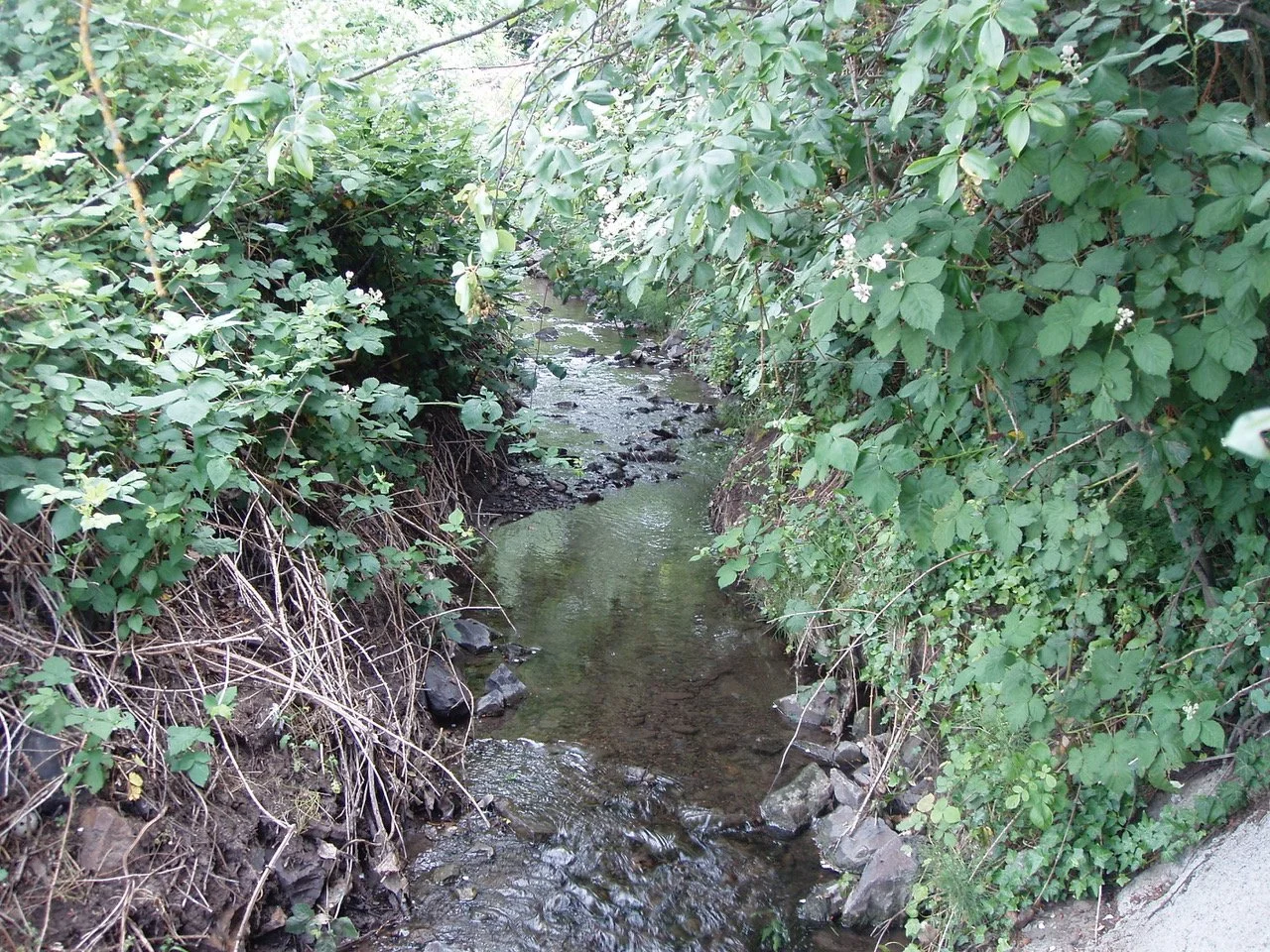
More Than A Ditch
It is easy to view the water flowing through our neighborhoods as nothing more than a convenient way to move storm runoff away from our homes. However, these waterways are not just infrastructure; they are functional salmon and steelhead streams. While they may look modest, the urban tributaries of Bear Creek serve as critical spawning and rearing habitat. For our local fish populations, these small stretches of water are the starting point of their entire life cycle.
2024 Fish Kill Event
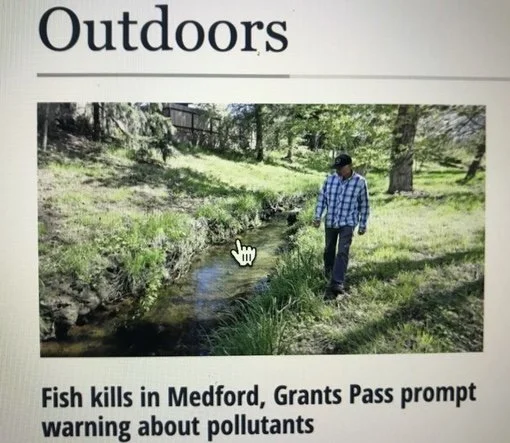
ODFW volunteer walking a stretch of Lazy Cr below Black Oak documenting dead fish
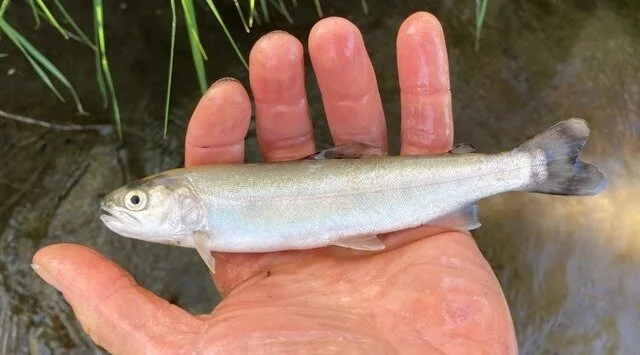
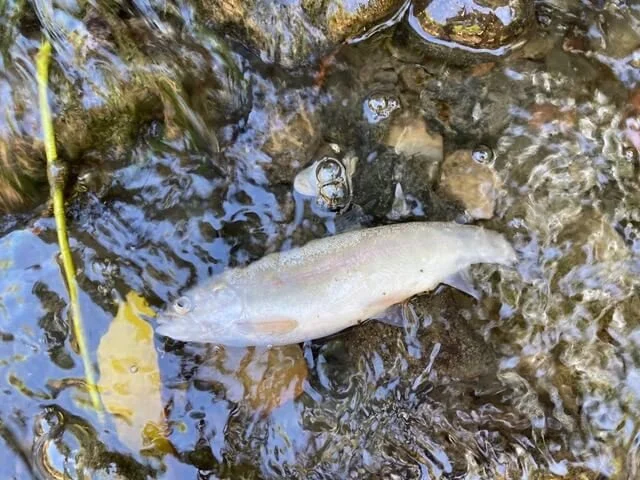
The images below show the direct consequence of what happened when toxic water was dumped into Lazy Creek. Following the 2024 discharge event in the stretch of creek between Siskiyou Blvd and Murphy Rd, dozens of dead fish were documented as far downstream as Burgundy Circle. The impact was not limited to one age group; the kill included both "fry" (young of the year) and 1–2-year-old juveniles. Because these tributaries are small and shallow, the chlorine, salt, and chemicals from a single pool drainage are concentrated enough to be lethal to an entire stretch of creek.
Are There Really Fish In That Creek?
The above video is case in point on two counts. The video shows a pair of steelhead spawning in Lazy Creek right next to a discharge hose coming from a residents backyard. Hoses just like this one are often the culprits, spilling toxic water from pools and spas.
Nearly all of Bear Creek’s tributaries are used by the Rogue’s summer steelhead either for spawning or rearing or both. You don’t get much more urban than the Navigator’s Landing stretch of Lone Pine Creek near the Medford Airport. The video above is of steelhead spawning on Christmas Day last year just a stones throw from Biddle Road.
Free Passage
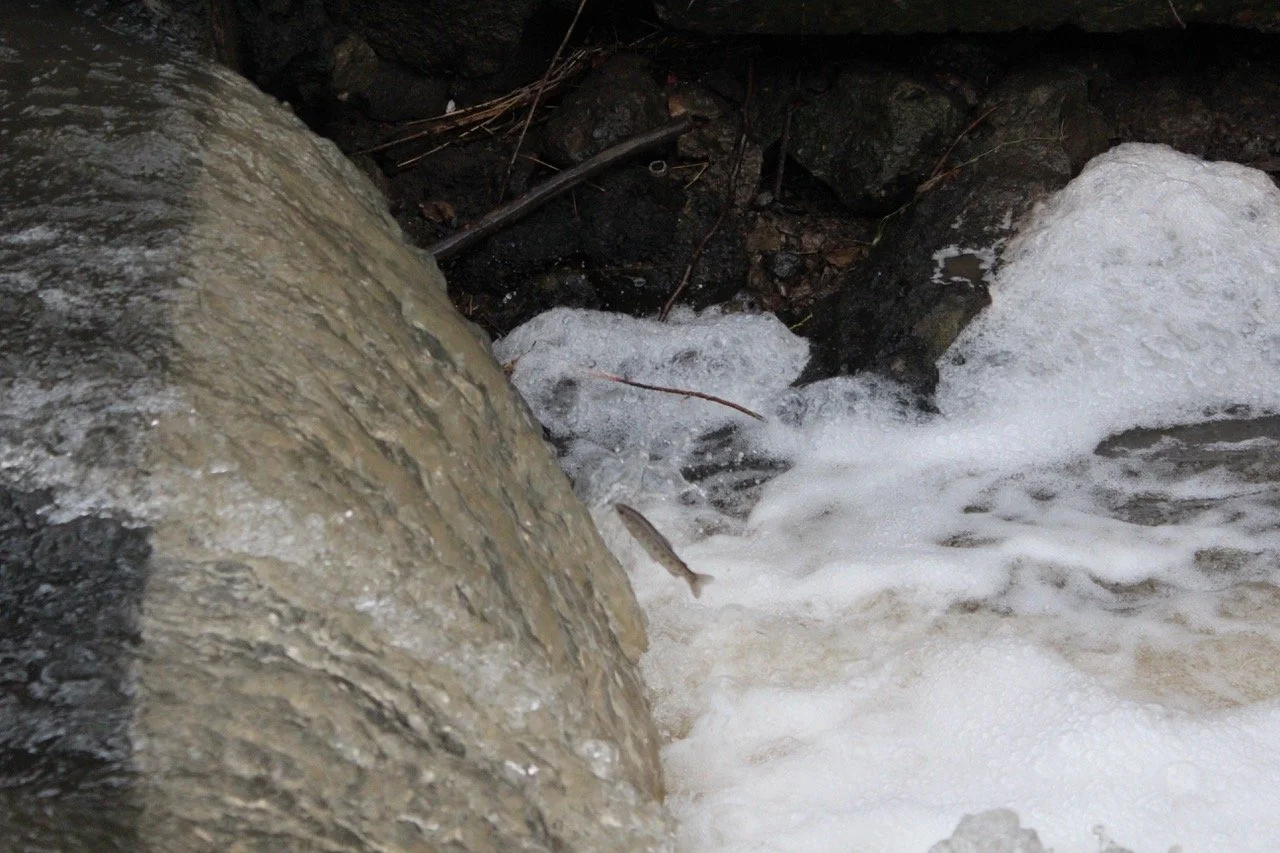
Juvenile steelhead gives its all to leap over the insurmountable barrier on Lazy Creek.
This view of the former box culvert on lower Lazy Creek serves as a stark reminder of the infrastructure that once stifled our local stream. Far from a natural feature, this ugly concrete structure created a total barrier for juvenile fish, effectively trapping them downstream and denying them access to their critical upstream wintering grounds. For adult salmon and steelhead, the culvert remained a grueling partial blockage, often thwarting their final push to reach spawning gravels.
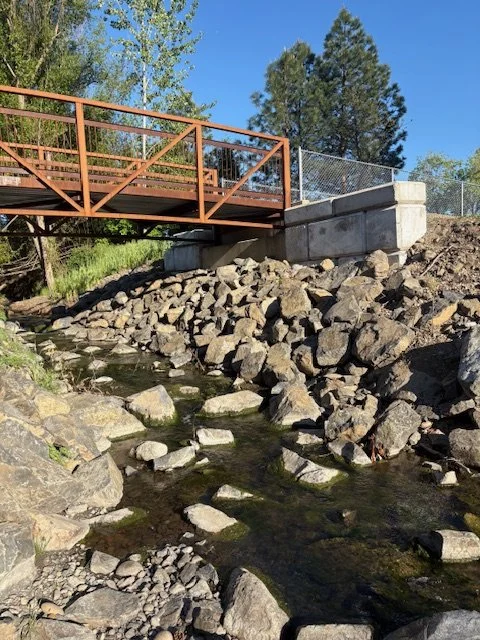
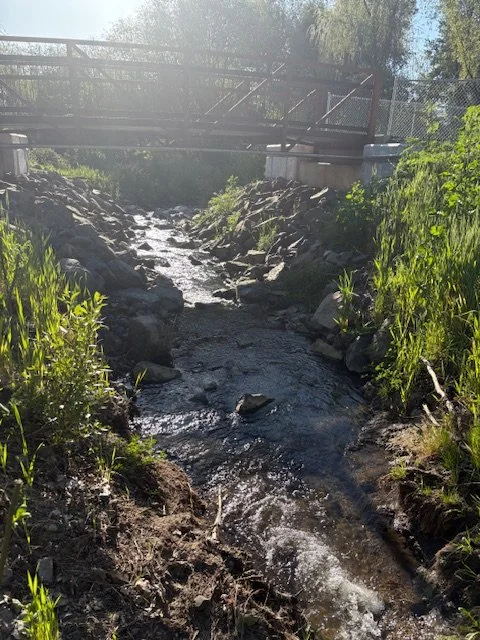
For years, there have been multiple attempts with band-aide fixes to improve passage. But with the recent installation of the expansion bridge, this artificial hurdle has finally been replaced by a free-flowing channel, restoring the natural migration corridor for the first time in decades. Now that the path is open, it is up to us to act as stewards of the creek—protecting the water quality and preserving the delicate riparian habitat to ensure that the fish who finally made it upstream have a healthy environment in which to thrive.