If You Build It, They Will Come
The Culprits
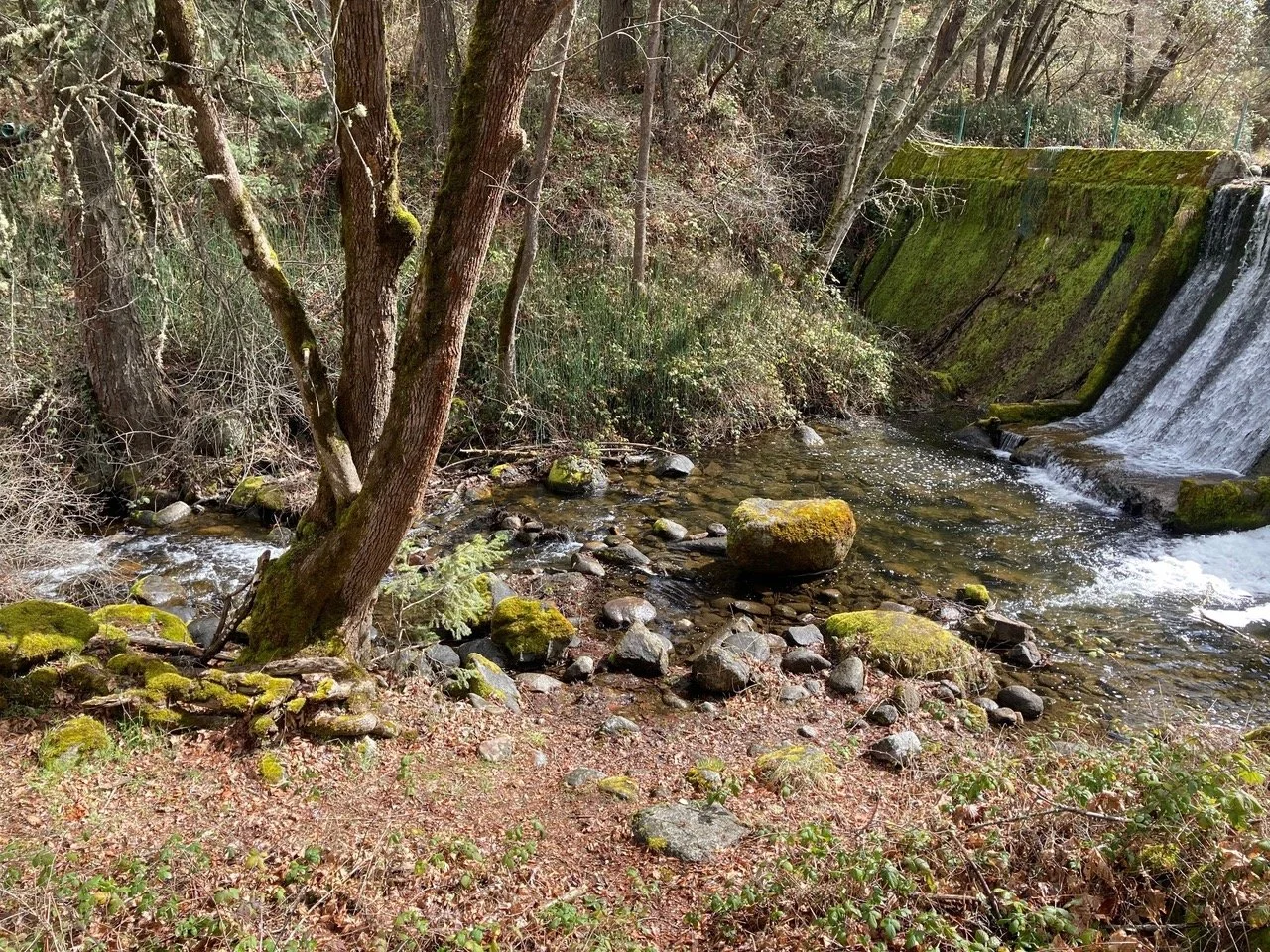
To fully appreciate the necessity of our gravel supplementation program, it is important to recognize that the scarcity of spawning habitat often times isn't a natural occurrence. The "starved" state of many of our streams is a direct consequence of a century of human intervention and land-use decisions. By identifying the specific man-made culprits that have disrupted the natural movement of substrate, we can better understand why active, hands-on restoration is the only way to restore the balance.
Dams:
Dams are perhaps the most obvious culprit in the depletion of spawning habitat. By their very design, they act as a total blockade, trapping the natural downstream migration of gravel from the headwaters and settling it at the bottom of reservoirs. While dam removal is often the ideal ecological goal, it frequently proves impractical—especially in the urban areas surrounding many Rogue tributaries where infrastructure and property rights create complex barriers. In these reaches, where a dam is unlikely to be decommissioned anytime soon, we cannot simply wait for a policy shift while the fish disappear. Gravel augmentation serves as a critical short-term solution, allowing us to bypass the blockade and manually restore the life-sustaining substrate that the river can no longer deliver on its own.
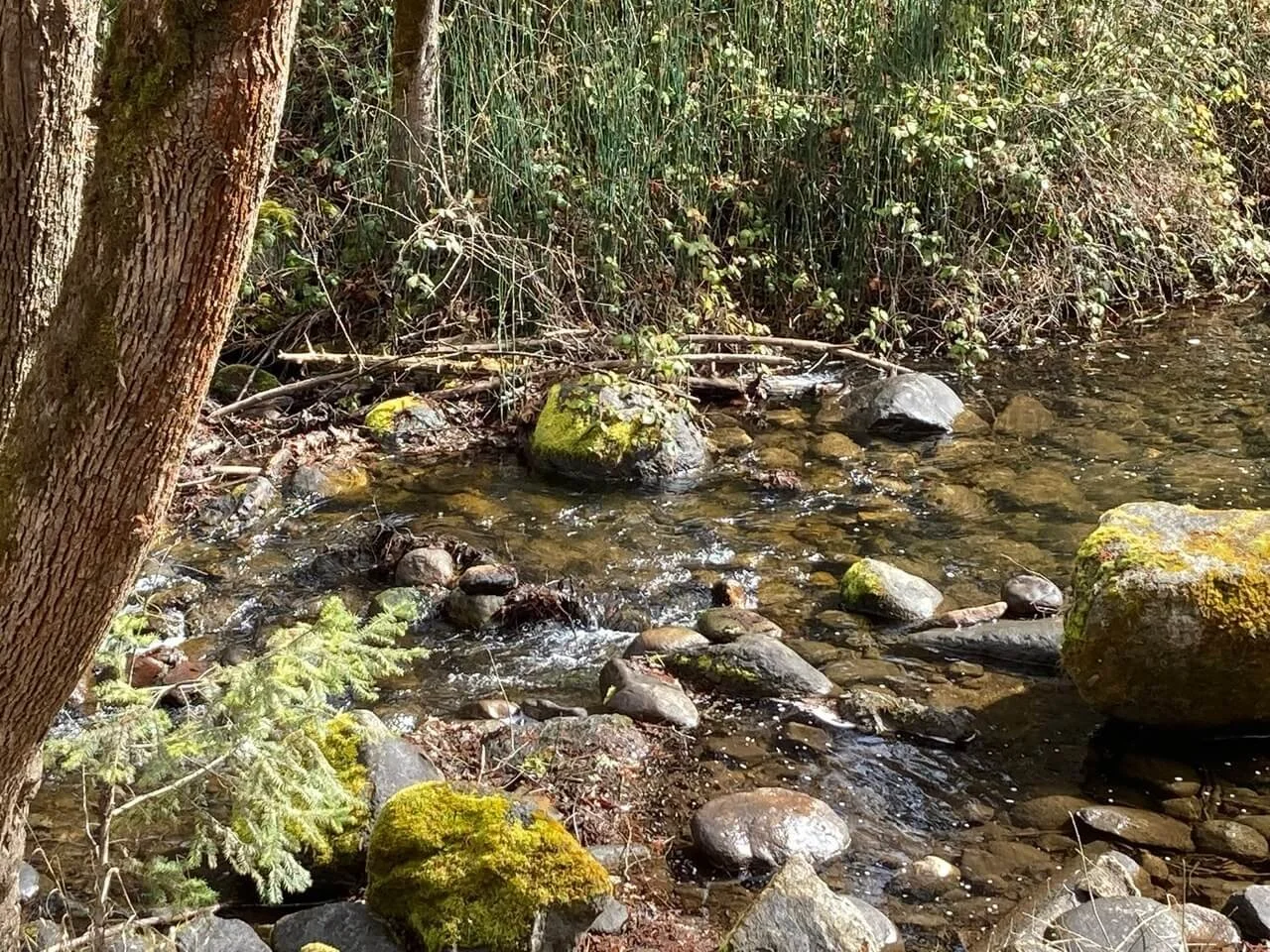
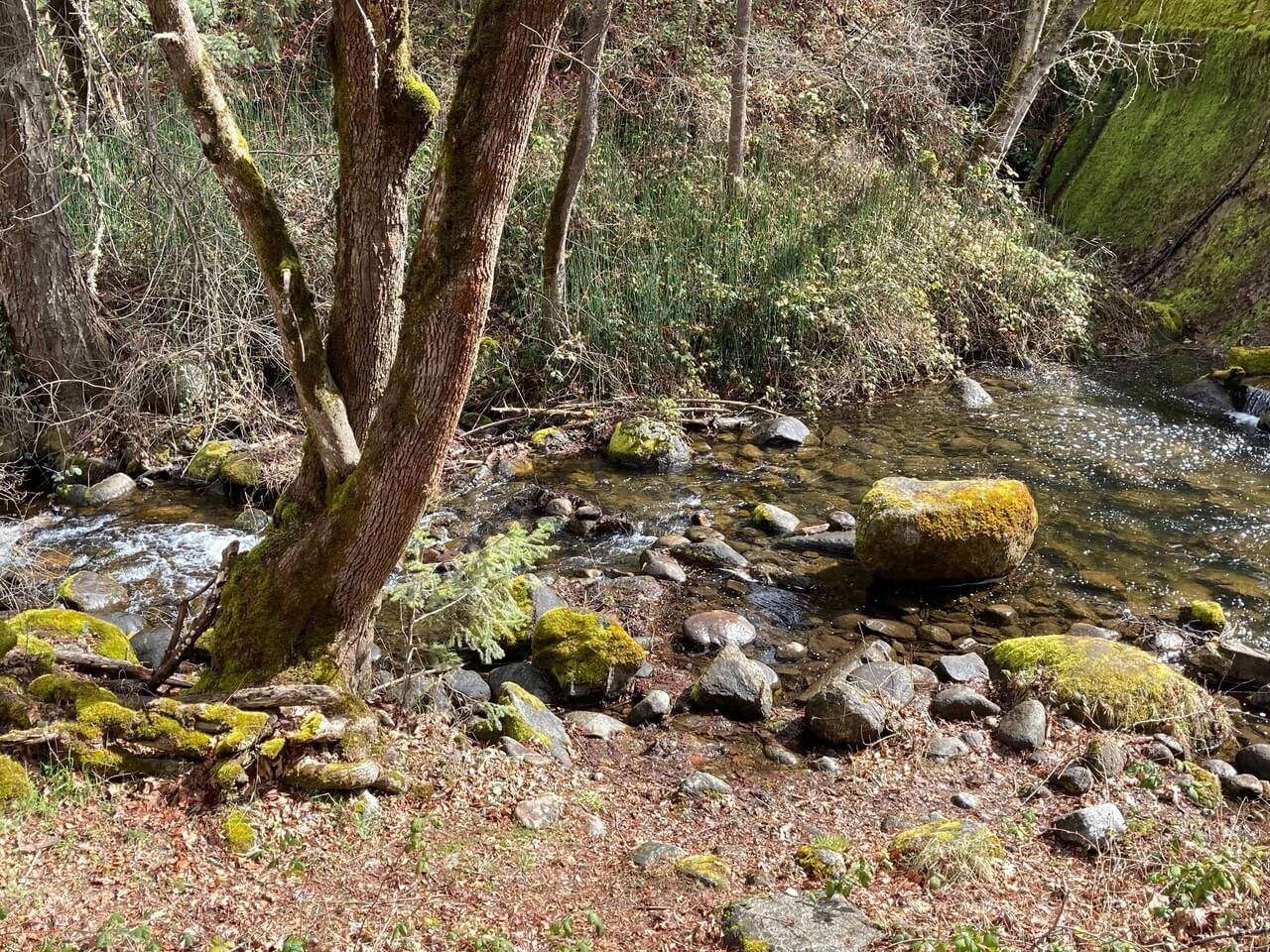
A Complete Depletion: A clear look at the lack of gravel recruitment below the dam. It is a stark representation of the habitat crisis facing the entire tributary.
Bank Armoring:
While bank amoring is often intended to protect property from the force of moving water, it creates a "bulletproof" barrier that severs the connection between the stream and its natural source of substrate. In a healthy system, a stream periodically erodes its banks to recruit new gravel and sediment, replenishing the stream bed as older material washes downstream. When long stretches of a creek are lined with rip rap or concrete, this natural recruitment process is completely halted and in-turn limiting the amount of gravel available for fish to use during spawning.
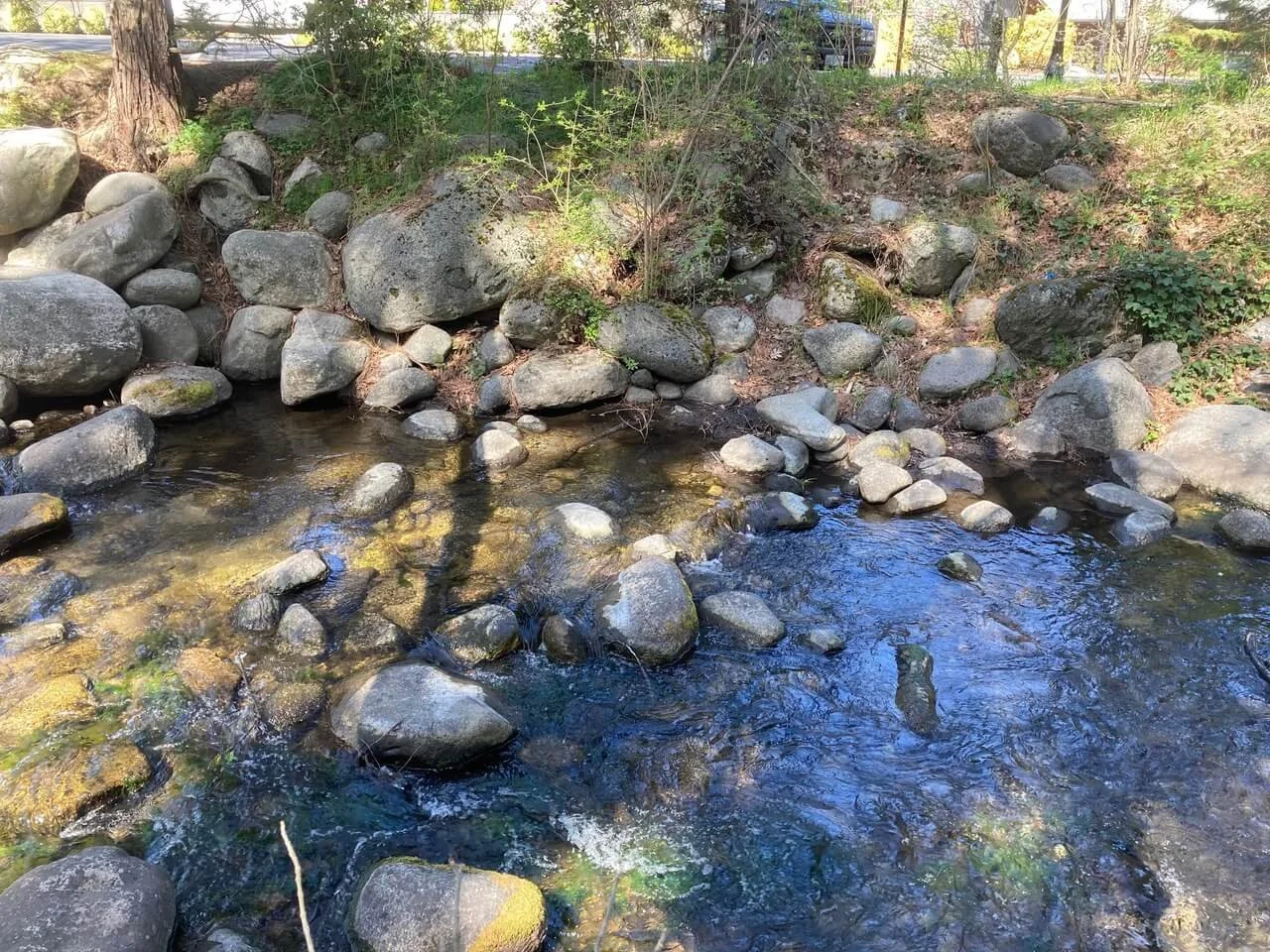
While these rounded granite boulders are more aesthetically pleasing than traditional jagged rip rap, their impact is identical. To the casual observer, it looks natural, but for the stream, it is a barrier that locks away vital habitat.
Incising:
Incising describes the process where a stream becomes trapped within a narrow, unnatural channel, effectively "chiseling" its way deeper into the earth rather than spreading across its natural floodplain. During high-water events, the stream is unable to overflow its banks; instead, the water is forced through a tight corridor where its velocity dramatically increases. This high-energy flow scours the streambed, flushing out spawning-sized gravel at an accelerated rate. Without recruitment from upstream to replace what is lost, the reach is quickly stripped bare. The effect is a destructive snowball: each storm deepens the "ditch," further locking the creek away and making it nearly impossible for the system to ever "unlock" itself.