Keep A Watchful Eye!
For many visitors, the park is a place for a quiet stroll or a moment of reflection, but beneath the surface of Ashland Creek, one of nature’s most incredible odysseys is unfolding. While the Rogue River’s steelhead begin their journey from the ocean in the summer, they often "hold up" for months, waiting for the winter rains to signal the final leg of their migration.
When those rains arrive, these resilient fish push into our local tributaries to complete their life cycle. It is an overlooked wonder that happens right in our backyard—a chance to witness the ancient ritual of the spawn in the heart of our community.
Hidden Magic
The spawning window in Ashland Creek is surprisingly long, stretching from late December through May, with the absolute peak activity typically occurring between March and mid-April. To see the magic for yourself, it’s easiest to keep a watchful eye in locations where you see our restoration signs. We’ve placed these to deter wading, as the very spots humans like to step are often the exact places steelhead choose to build their redds (nests). Also, keep an eye out in areas where you see large collections of golf-ball-sized gravel. For this is the very habitat steelhead use to spawn.
Where And When To Watch
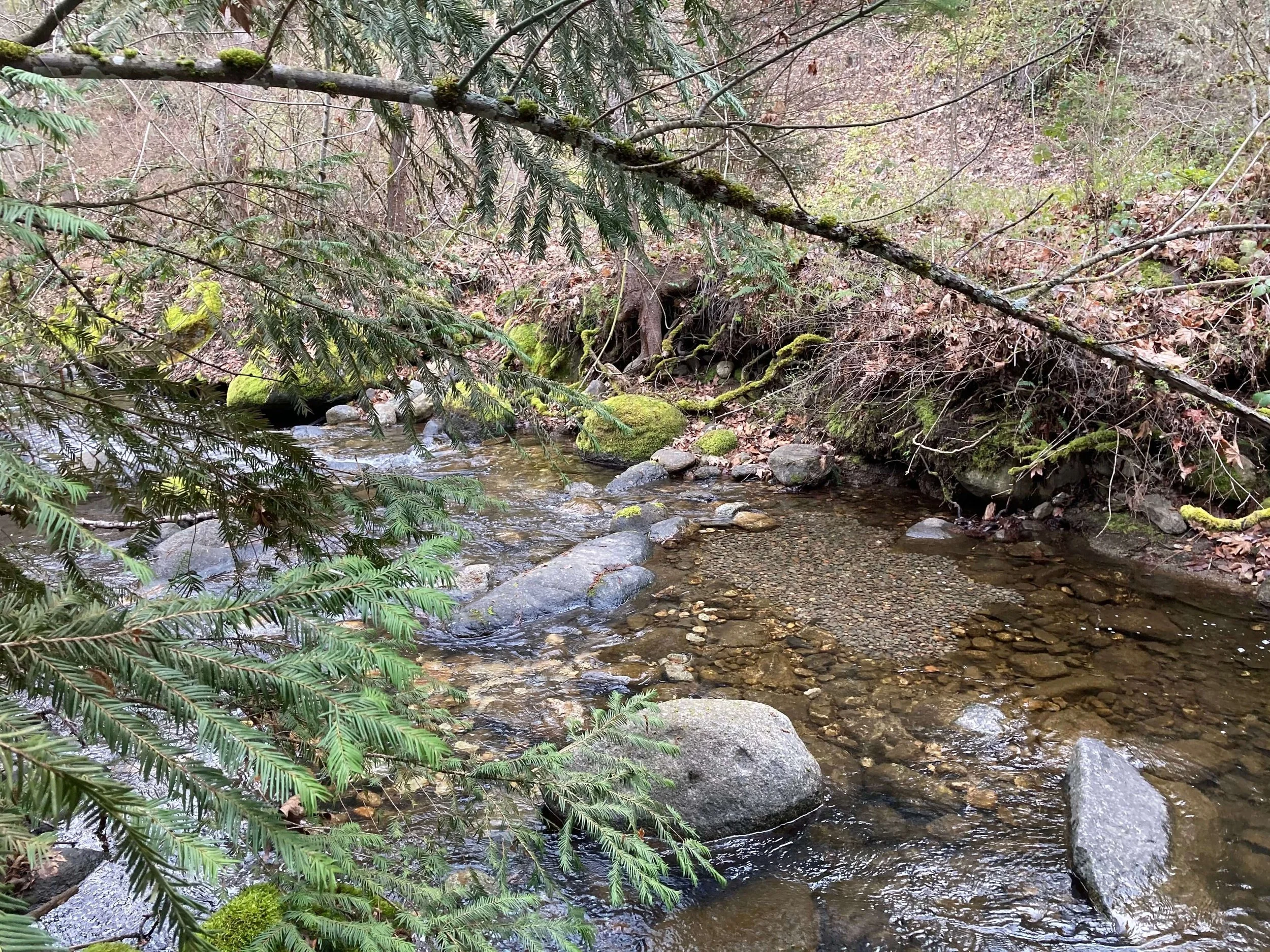
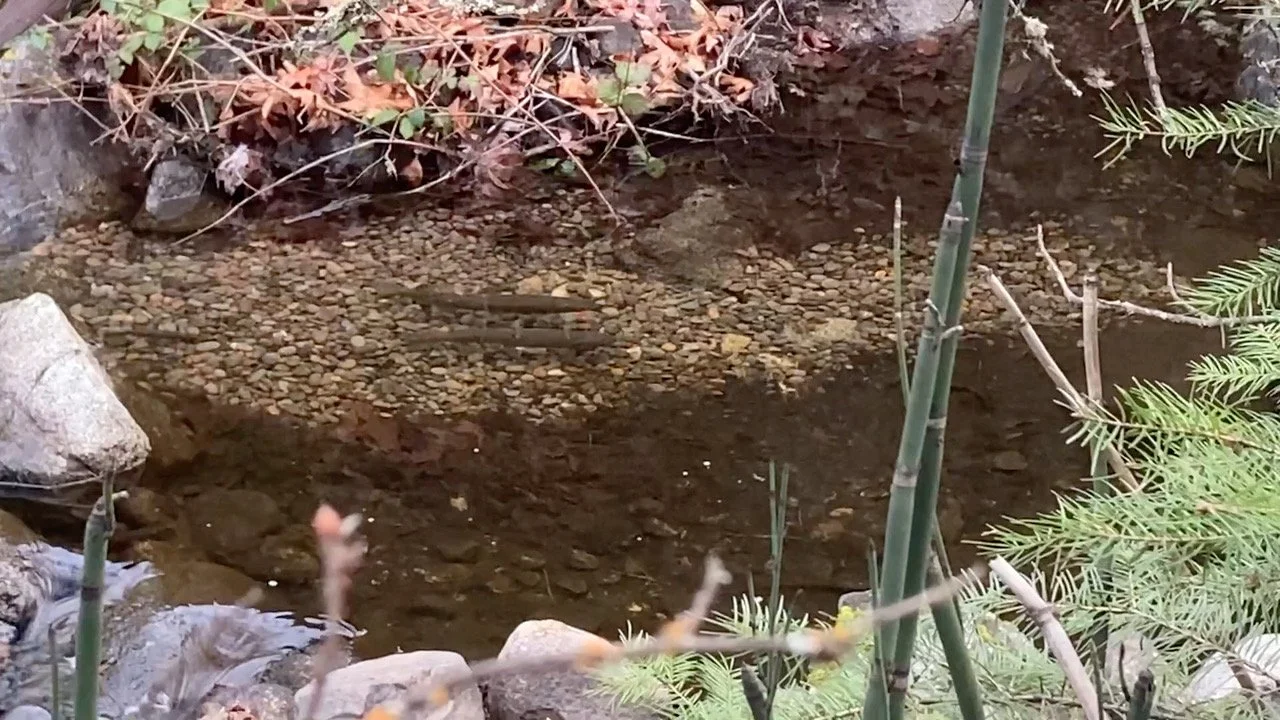
A glimpse at the spawning platform from the video above freshly charged with new gravel waiting for the fish to arrive. Because this gravel had just been deposited, it is algae free and easy to distinguish from the other natural rock.
Spotting The Spawning
Look closely at the stream bed for collections of golf-ball-sized gravel. Any “clean” mound of gravel is very likely to be a redd on a spawning platforms built through gravel enhancement efforts. Because natural gravel is often trapped by upstream dams or washed away by high flows, these man-made additions provide the perfect "nursery" for the next generation of steelhead. Almost every one of these platforms will be utilized by spawning fish at some point during the year—so if you look closely, you might just see the future of the Rogue River in motion.
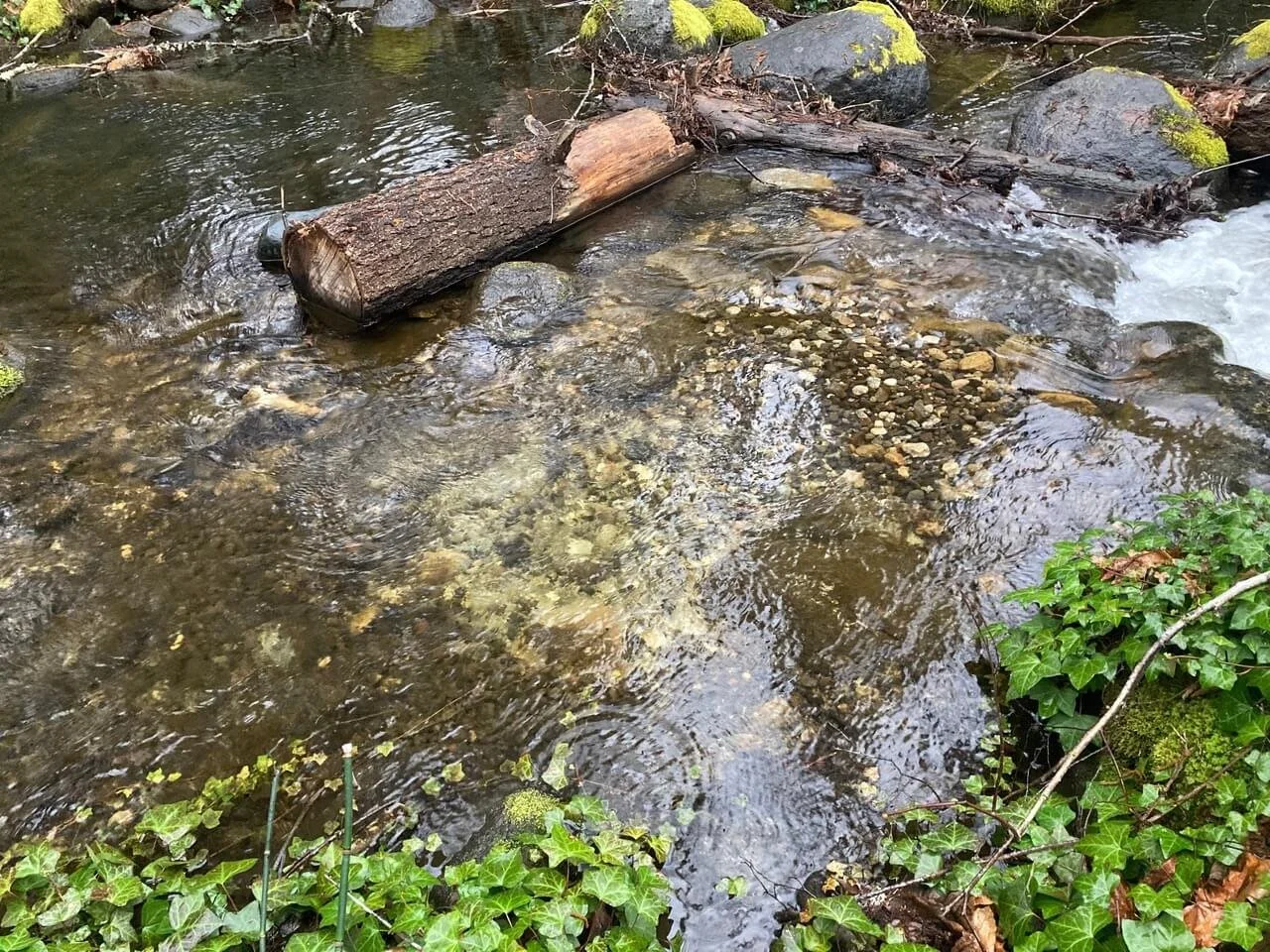
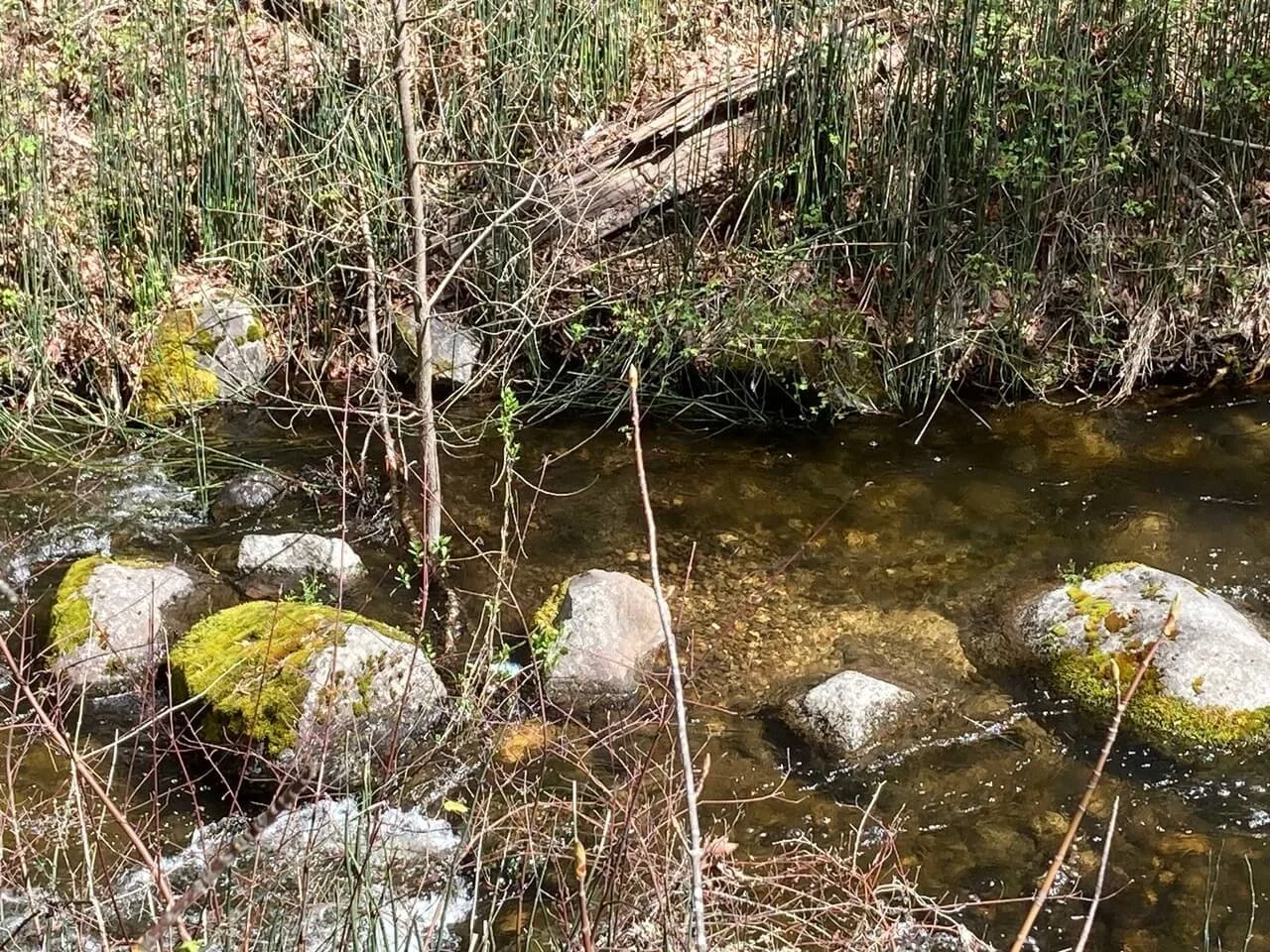
You don’t need to be a fish biologist to spot a steelhead redd in Ashland Creek. While gravel enhancement efforts initially deposit "clean" rock, these stones are typically placed months before the fish arrive. By the time spawning season begins, the creek’s natural environment has already claimed them; the once-bright gravel becomes covered in a thin layer of brown silt and algae.
However, when a female steelhead spawns, she flips and stirs these stones in the process of digging a redd (nest) to protect her eggs. This action unearths the clean, algae-free surfaces hidden beneath the silt, creating a bright, polished "scar" on the bottom of the stream. This clean rock acts as a visual beacon in the water—a "glowing" sign of life. Once you recognize that contrast against the surrounding stained cobble, you’ll start seeing the success of our enhancement programs everywhere you look.
Obvious Call To Action
3RC’s focus on Ashland Creek is the result of a simple observation during a routine spawning survey in 2017. While walking nearly a mile of what should be one of the Rogue’s most productive tributaries, the lack of suitable habitat was shocking. We counted only five marginal sites that could be utilized for spawning and just one that could be considered "prime." The crisis became undeniable when we found a pair of steelhead attempting to cut a redd (nest) on top of watermelon-sized boulders and a handful of decomposed granite—a site with zero percent chance of success. Sparked by curiosity and interest as much as a desire to help, we hauled in a few buckets of properly sized river cobble and placed them at the head of the site. Within ten minutes, the pair was actively utilizing the new gravel, and within hours, they had exhausted the initial supply. We returned with more buckets to finish the job, and by the next day, a beautiful, functional redd remained where there had previously been only bare rock. It was a visceral realization that while the fish had the drive, they lacked the habitat. We completed our surveys for the year feeling like that single redd was likely the most successful spawning event in that entire section of creek that season.
Our hope is to partner with Ashland Parks and Recreation to transform the discontinued restoration efforts into a permanent, long-term strategy for gravel supplementation.
A Shared Home
It is easy to forget that the same place where we play, relax, and celebrate is also a vital sanctuary for the iconic fish that help define the Pacific Northwest. We are incredibly fortunate to witness this natural magic playing out right in our own backyard, but with that privilege comes a responsibility. As we enjoy everything this park has to offer, we must also act as good stewards of the habitat that these resilient creatures rely on to survive. The future of Ashland Creek’s steelhead depends on our collective care and support.