Sardine Creek Dam Removal
Restoring the Reach
For 2026, we are setting our sights on a project that perfectly illustrates our "no project is too big or too small" approach to restoring the Rogue’s habitat. Near the top of a major natural falls, a man-made dam stands as the final gatekeeper for migrating steelhead. While the dam itself isn't towering in height, it lacks a sufficient jump pool at its base, creating a technical barrier that even the strongest fish can't clear. To make matters worse, the large falls below already presents a natural obstacle that fish can only navigate during extreme high-water events. After fighting their way up the falls, the exhausted steelhead find themselves trapped by a few feet of concrete that should never have been there.
While some might see this double-obstacle as too complex or daunting to fix, we see a massive opportunity to reopen miles of pristine upstream habitat. By removing this barrier, we are ensuring that when those rare high-water windows open, the fish aren't just making it past the falls—they are making it home. It’s a project that won't make national headlines like the massive mainstem removals, but it’s the kind of critical, "under the radar" fix that ensures the heavy lifting done downstream actually results in fish in the gravel upstream.
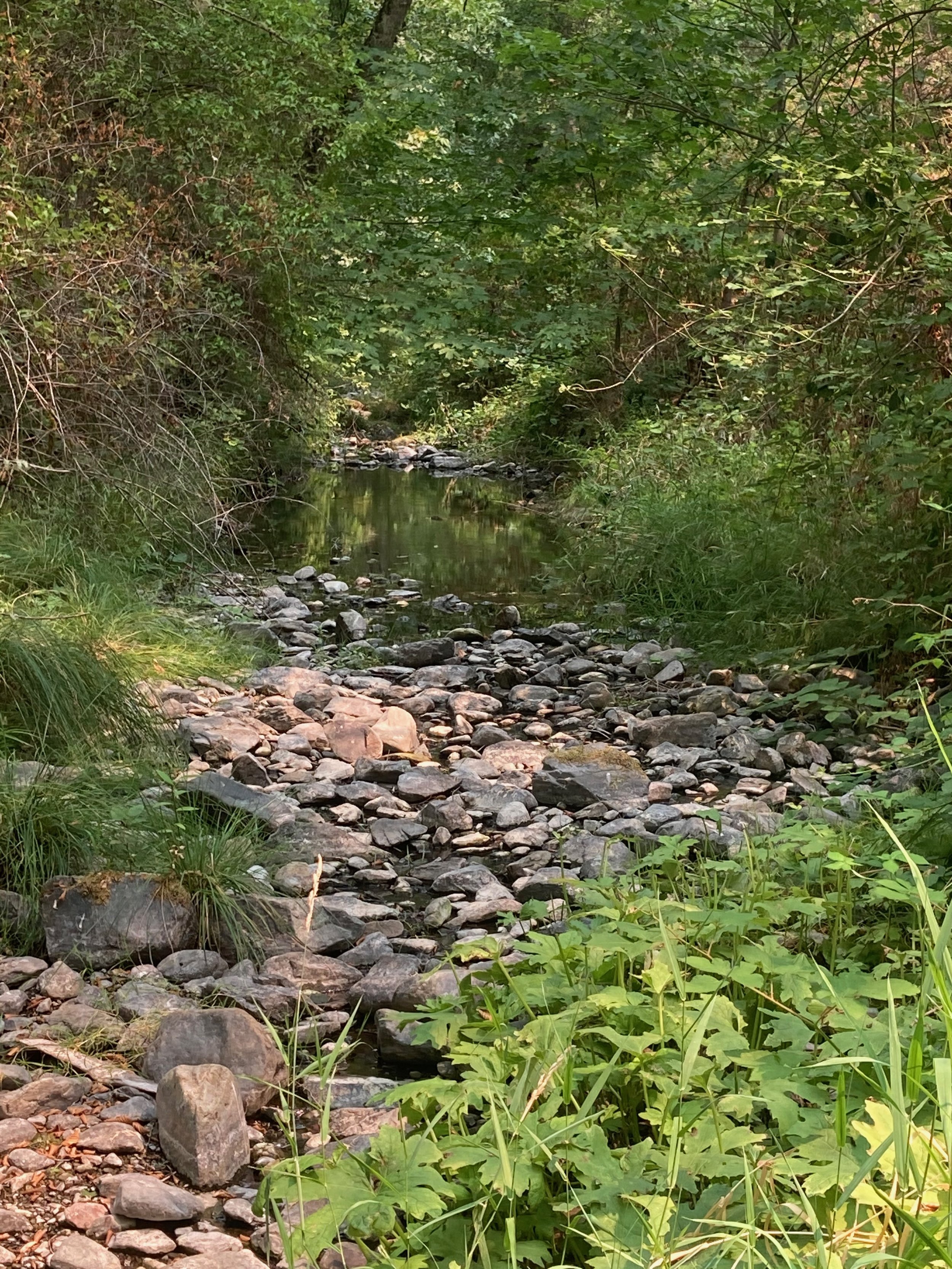
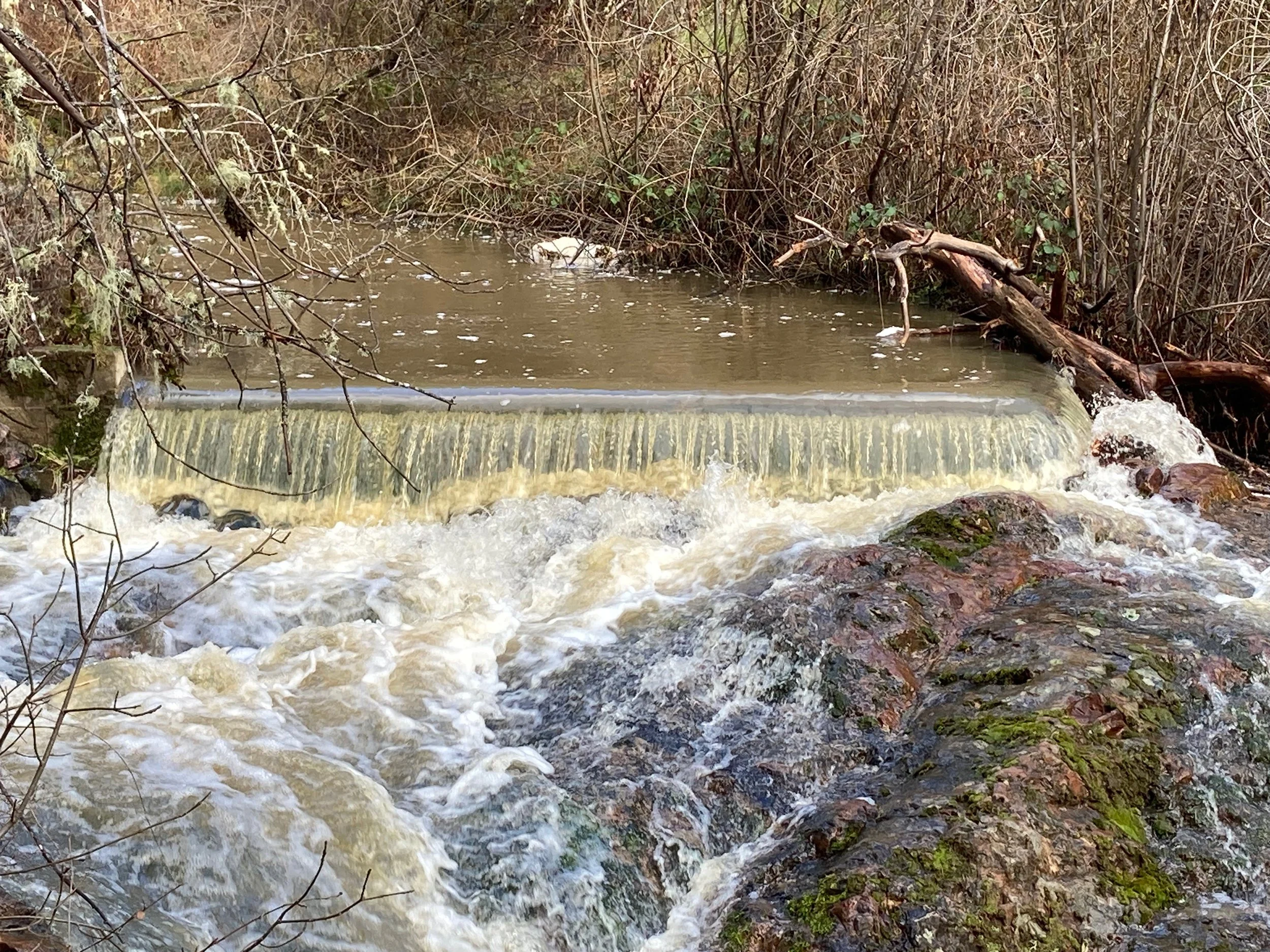
Shaded Sanctuary: Above the Barrier
The removal of this dam is about far more than just a clear path—it’s about unlocking a vital summer sanctuary. Unlike the porous, dry valley bottoms that struggle to hold water, the streambed above this barrier is characterized by solid bedrock that naturally pools and holds water throughout the hottest months. Tucked away under a thick, cooling tree canopy, these upper reaches offer a thermal refuge that the lower creek simply can't provide. For juvenile steelhead that are unable to migrate out due to downstream lock-points or low flows, this shaded "cold-water oasis" is their only chance at survival. By removing the dam, we aren’t just opening a trail for spawners; we are giving trapped juveniles access to a resilient habitat where they can summer over and thrive, even when the rest of the valley is bone-dry.